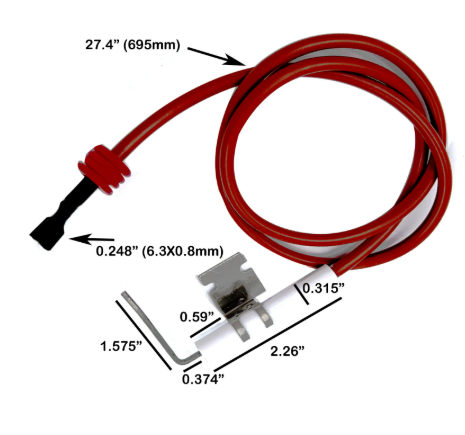
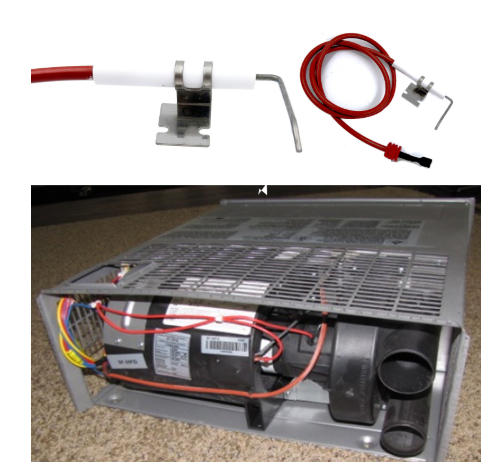
Suburban RV Furnace Ignition Electrode Wire | 232286 Probe Gas Igniter
$30.00
Suburban 232286 RV furnace ignition electrode wire assembly. Replacement spark probe for Suburban, Atwood & Dometic RV furnaces. Single wire, ceramic insulator, stainless steel probe. Easy installation, precise spark gap. Free shipping worldwide.
Free shipping on orders over $60! Delivery time: 7-12 days
- Satisfaction Guaranteed
- No Hassle Refunds
- Secure Payments
Suburban 232286 RV Furnace Ignition Electrode Wire Assembly
The ignition electrode (spark plug) is the component that creates the spark to ignite the propane-air mixture in your RV furnace burner. It consists of a stainless steel probe, ceramic insulator, and connecting wire. Over time, the electrode can wear, crack, or become coated with carbon, causing weak or no spark and ignition failure.
This Suburban 232286 ignition electrode wire assembly is a direct replacement for Suburban, Atwood, and Dometic RV furnace igniters. It features a high-quality ceramic insulator, stainless steel probe, and durable silicone wire for reliable ignition in all conditions.
Compatibility
- Suburban SF-20, SF-25, SF-30, SF-35, SF-42 furnaces
- Suburban NT-16, NT-20, NT-24, NT-30, NT-34, NT-40 furnaces
- Suburban SW6D, SW10D water heaters (select models)
- Atwood Hydro Flame 85-IV, 89-III, AFMD series furnaces
- Dometic DFMD, DFSI series furnaces
- Replaces part numbers: 232286, 232287, 520814, 31501
- Most 12V spark-ignition RV furnaces with single electrode
Specifications
| Parameter | Specification |
|---|---|
| Part Number | 232286 (replaces 232287) |
| Type | Single wire ignition electrode |
| Probe Material | Stainless steel |
| Insulator | High-temperature ceramic (95% alumina) |
| Wire Length | ~12″ (30cm) silicone high-voltage wire |
| Wire Connector | Spade terminal (fits standard ignitor board) |
| Spark Gap | 1/8″ (3mm) — pre-set at factory |
| Operating Temp | Up to 1200°C (2200°F) at probe tip |
| Mounting | Single screw mounting (matches original) |
| Certification | CE, RoHS |
Installation Guide
- Safety first: Disconnect 12V power at the battery. Turn off propane supply. Allow the furnace to cool completely if it was recently running.
- Access the burner: Remove the furnace exterior access panel. Locate the burner assembly — the ignition electrode is typically mounted near the burner tube, visible through the access panel.
- Disconnect wire: Unplug the high-voltage wire connector from the ignitor board. Note the connection point.
- Remove old electrode: Unscrew the single mounting screw holding the electrode to the burner bracket. Carefully pull the electrode out of the burner housing.
- Clean the area: Use a wire brush or sandpaper to clean any carbon buildup or corrosion from the burner tube and electrode mounting area.
- Install new electrode: Insert the new 232286 electrode into the mounting position. Secure with the mounting screw. Ensure the electrode is properly aligned with the burner tube.
- Check spark gap: Verify the spark gap between the electrode tip and the burner tube is approximately 1/8″ (3mm). Adjust if necessary by gently bending the electrode (be careful not to crack the ceramic).
- Reconnect wire: Plug the high-voltage wire connector into the ignitor board. Ensure a secure connection.
- Test operation: Reconnect 12V power. Turn on propane. Set the thermostat to call for heat. Verify the ignition sequence: fan starts → spark ignites → flame is sensed. Check for proper ignition through at least one complete cycle. If the furnace doesn’t ignite, recheck the spark gap and wire connection.
Common Symptoms of a Bad Ignition Electrode
- Furnace won’t ignite — no spark visible
- Weak or intermittent spark
- Spark occurs but doesn’t ignite the gas (wrong gap position)
- Cracked or broken ceramic insulator
- Carbon buildup on the electrode tip
- Corroded or broken wire connection
- Furnace locks out after failed ignition attempts
- Clicking sound from the ignitor board but no spark at the burner
Maintenance Tips
- Clean annually: Remove the electrode and clean the tip with fine sandpaper or a wire brush to remove carbon buildup. This ensures a strong, consistent spark.
- Check gap: Verify the spark gap is 1/8″ (3mm) at the start of each heating season. A gap that’s too wide or too narrow can cause ignition problems.
- Inspect ceramic: Check the ceramic insulator for cracks or chips. A cracked insulator can cause the spark to arc to ground instead of jumping the gap to the burner.
- Check wire: Inspect the high-voltage wire for cracks, brittleness, or corrosion at the connectors. Replace if damaged.
- Keep spare: The ignition electrode is an inexpensive wear item. Keeping a spare on hand ensures you won’t be without heat if it fails during a trip.
Frequently Asked Questions
Q: How do I know if my electrode is bad or if it’s the ignitor board?
A: To isolate the problem, first check for spark at the electrode tip. You can do this by removing the electrode, holding it with insulated pliers near a ground point, and having someone turn on the furnace. If you see a strong blue spark, the electrode and board are likely working — check gas supply and burner alignment. If there’s no spark, disconnect the wire at the board and check for spark at the board output. If there’s spark at the board but not at the electrode, the wire or electrode is bad. If there’s no spark at the board, the ignitor board is bad.
Q: Can I clean and reuse an old electrode?
A: Yes, if the ceramic insulator is intact and the wire is in good condition, you can clean the electrode tip with fine sandpaper and reuse it. However, if the ceramic is cracked, the wire is damaged, or the electrode is heavily corroded, replacement is recommended. Electrodes are inexpensive and a common cause of furnace ignition failure.
Q: What should the spark look like?
A: A healthy ignition electrode produces a strong, blue-white spark that jumps consistently across the gap. A weak, yellow, or intermittent spark indicates a problem — possibly a weak ignitor board, bad wire connection, or carbon buildup on the electrode. The spark should be audible as a sharp “clicking” sound.
Q: How often should I replace the ignition electrode?
A: Under normal use, an ignition electrode typically lasts 3-5 heating seasons. However, this varies depending on usage frequency, maintenance, and environmental conditions. We recommend inspecting and cleaning the electrode annually, and replacing it every 3-4 years or whenever you notice ignition problems.
Related Products
- FAN 50 PLUS Ignitor Board — Universal 12V furnace ignitor board with fan control
- 520820 Circuit Board with Fan Control — Atwood furnace replacement board
- 37357 RV Furnace Blower Motor — 12V double shaft furnace blower motor
Need help finding the right ignition electrode for your RV furnace? Contact our technical team with your furnace model number. Free shipping and duties included.
You must be logged in to post a review.


Reviews
There are no reviews yet.